Potential Uses
A home for clearer research conversations
An educational identity for making research conversations easier to follow.
Teach the reading process
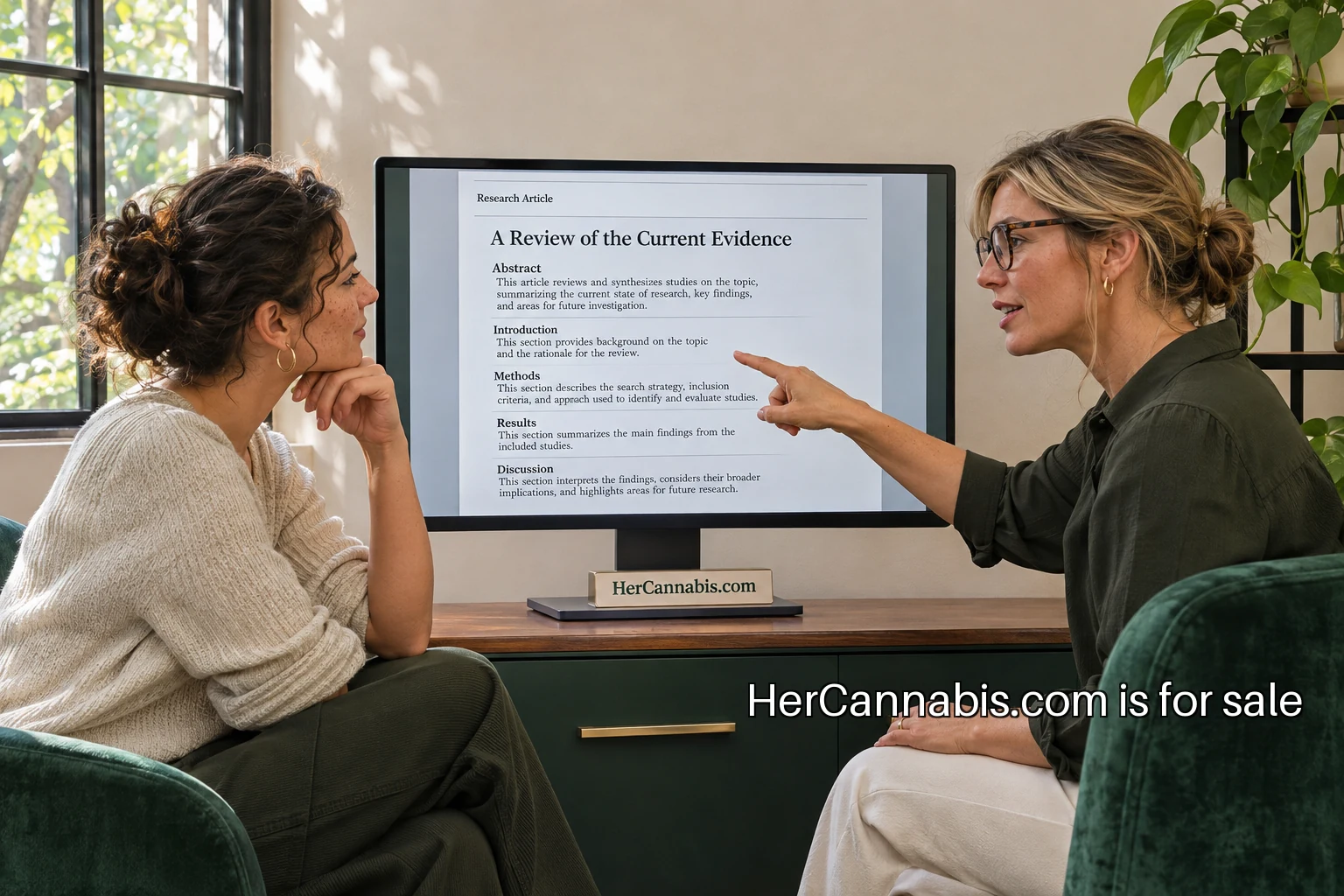
A research-literacy project could help adult readers examine how cannabis research is described in public. Its subject would be the reading process: finding an original source, identifying the question a study asks and noticing the difference between a finding and a headline. HerCannabis.com could give a women-focused educational project a clear place to host those conversations. I would begin with a single workshop that lets participants practice examining a source together.
The initial reader might be an editor, community organizer or communications professional who encounters research claims but does not conduct the research herself. Ask what kind of material she needs to read in her work. A headline, an organization’s summary and an academic abstract create different reading tasks. Select one task for the pilot so the session has enough time for actual practice. A broad overview can leave participants with vocabulary but no usable method.
Make a source card
A source card is a short record of what a document is and what the reader can establish from it. Include its title, authors, publication location, date, link and the question it addresses. Add spaces for the population or material studied, the method described and the limits stated by the authors. Leave unknown fields visibly unresolved. The card should help someone return to the evidence rather than giving a polished impression of certainty.
The NCCIH guide to finding and evaluating online resources is a useful reference for considering where information comes from and how to assess it. In the workshop, participants can use those source questions to examine a page before interpreting its claims. Who produced it? What is the purpose? Is there a date? Can the underlying source be found? Record the answers before discussing the headline.
Separate the documents in the chain
Choose a reporting example with an accessible original paper and a public summary. Ask participants to label the documents separately. The paper describes research; the summary selects a few points for a particular audience; a news story may add outside interpretation. Put the links in order and mark where wording changes. This simple exercise makes it easier to see which claim comes from which author and where a stronger conclusion first appears.
Use a neutral worksheet rather than a contest to catch mistakes. One column can hold the wording in the public summary, another the corresponding passage in the underlying source and a third the reader’s unresolved question. The purpose is to practice tracing an assertion. A participant who concludes that she needs more information has completed a useful step. She has identified a question that can be brought to a qualified reviewer.
Give review a visible job
The project should involve a qualified reviewer when selecting research examples and explaining technical methods. Define that role before publishing educational material. Does the reviewer examine accuracy, the limits of the exercise or both? Who updates the page if the underlying paper is corrected? Put the review date and scope near the material so a reader can understand what the review covered. Avoid using a credential as a substitute for describing the actual work performed.
The founder also needs an editorial boundary between research literacy and personal health decisions. Keep examples focused on how information is produced and reported. Questions about an individual’s circumstances belong with an appropriate professional rather than a group worksheet. A facilitator can acknowledge the question, restate the session’s scope and return to the source-reading task. Preparing that response beforehand makes the boundary easier to maintain respectfully.
Plan a workshop with a clear output
A pilot can begin with ten minutes on the source card, followed by a small-group comparison of two documents. Give participants enough time to locate the original source themselves. The facilitator can then ask each group to explain one difference in wording and one question it could not resolve. Close by having each participant complete her own card. The output is a document she can use as a model the next time a research claim crosses her desk.
Make the materials accessible and send them before the session. Use meaningful link labels, readable headings and a format that does not require participants to interpret a photograph of text. Explain specialized terms when they first appear. If a method needs a longer explanation than the session allows, add a clearly labeled reading option rather than rushing through a list of definitions. The lesson should give people enough time to notice how they are reading.
Publish the learning method
After the pilot, revise the worksheet using the questions participants actually asked. Keep a short change log showing which fields were confusing and how they changed. A public example card can demonstrate the method, provided permissions and review are handled. Give readers a way to report a broken link or a source update. The project’s value would come partly from making that maintenance visible over time.
The first useful test is small: can a participant locate a source, describe its question and explain one limit without borrowing the headline’s wording? If the workshop helps her do that, the founder has a concrete educational result to build upon. HerCannabis.com could hold a growing collection of these exercises under a clear women-focused identity, with careful source reading as the consistent thread.
Put women’s perspectives at the center
Ask about HerCannabis.com for a women-focused cannabis publication, professional community or research-literacy project.
Ask About Pricing