
Articles
Plan a first gathering people can actually take part in
Invitation, access needs, agenda, facilitation and follow-up for a small non-consumption event.
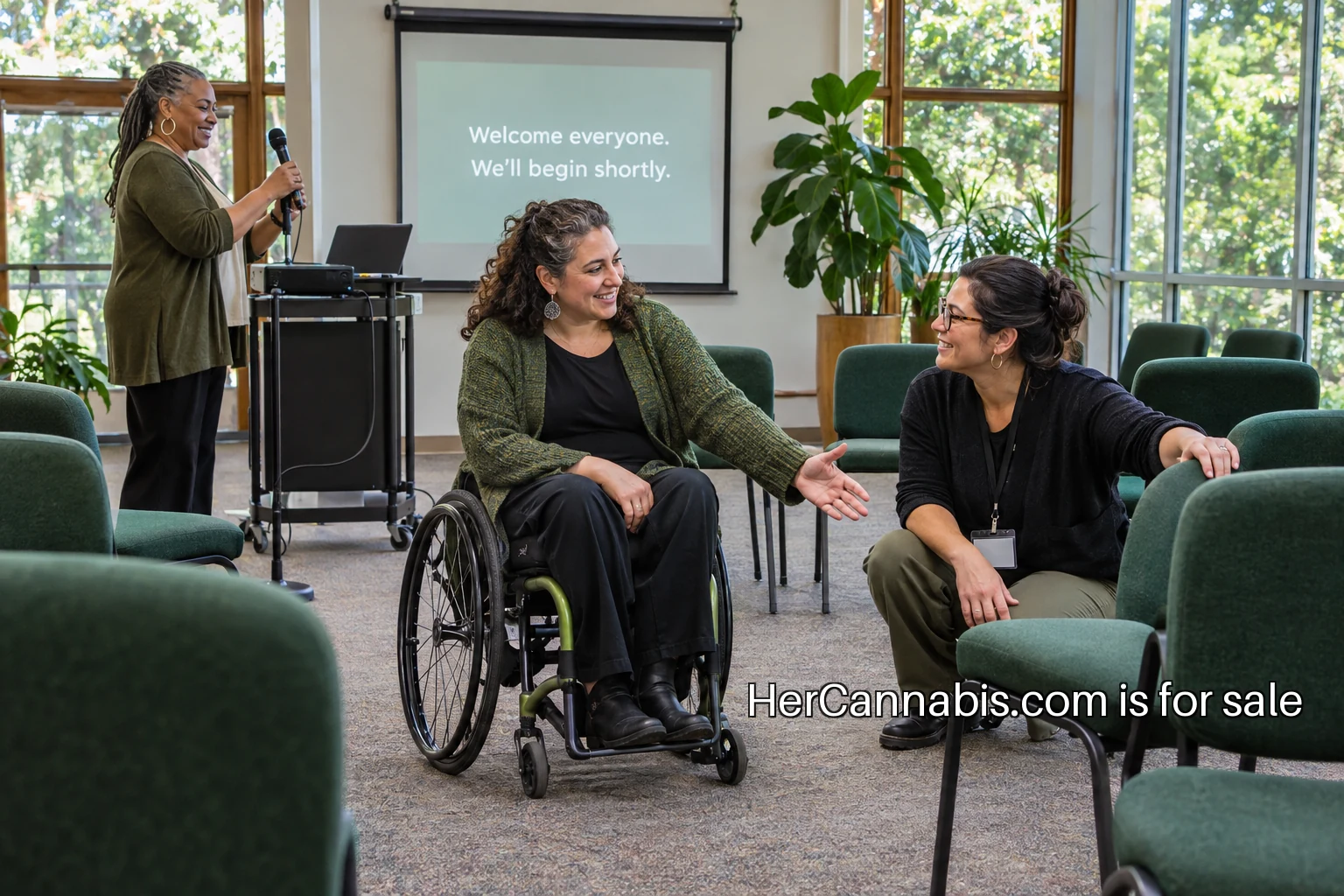
Define the work the gathering will do
A first professional gathering needs a useful purpose and a clear way to participate. A women-focused cannabis community might bring together editors, researchers and communications professionals, but those job titles do not create an agenda by themselves. Choose one shared question. For example, the session could compare how participants prepare public interviews or how they explain technical work to a general audience. A precise question helps people decide whether the meeting belongs on their calendar.
Write a one-sentence outcome in the planning document. By the end, participants might have a draft interview brief or a clearer process for reviewing a source summary. Keep the outcome within the group’s control. The host can prepare a good exchange and a useful worksheet. The host cannot promise that every participant will meet a future collaborator. A realistic outcome makes the invitation easier to write and the session easier to evaluate.
Put access into the first budget
Access decisions affect the venue, platform, materials and staffing. Consider them while there is still room to change the plan. The W3C guidance for accessible presentations and events offers a practical starting point for reviewing the experience participants will have. Use it to develop questions for a venue or platform provider and assign responsibility for checking the answers.
A planning sheet can list joining instructions, routes through the venue, communication options, document formats and a private contact for access requests. Mark each item as confirmed, unresolved or requiring follow-up. Avoid describing an event as accessible simply because one feature is available. Explain the actual arrangements in the participant brief and make it easy to ask about a need the brief does not cover. Specific information helps people make their own decision.
Send an invitation that answers practical questions
The invitation should identify the host, intended adult audience, subject, date, duration and format. Explain the participation options and whether a recording or public summary is planned. State that the gathering is a professional discussion with no product sales or consumption activities. A person should be able to understand what she is joining without decoding a promotional paragraph. Keep the main details in text rather than only in a graphic.
Include a named route for private questions about access and participation. Explain when people can expect joining details and what they need to prepare. If preparation is optional, say so. A participant with limited time should know whether she can still follow the conversation. Avoid sending a long reading packet and treating it as an unspoken requirement. One short, well-labeled worksheet may support the purpose better than a folder of background material.
Make the agenda visible before the meeting
For a one-hour pilot, reserve time for orientation, a short working example, small-group or whole-group discussion and a close. Share the sequence in advance. Tell participants when questions will be taken and how they can contribute in writing. The facilitator can refer back to the agenda during transitions so people know what is happening next. Predictable structure helps the meeting feel manageable even when the discussion itself is exploratory.
Prepare the example carefully. If the topic is interview planning, use a fictional assignment brief that contains ordinary editorial decisions rather than a participant’s sensitive work problem. Ask people to identify the missing question, unclear attribution plan or unsupported assumption. A shared example lets everyone practice the method before deciding whether to bring in their own experience. It also reduces the pressure to disclose something personal in order to take part.
Assign roles instead of hoping someone notices
The host and facilitator may be the same person in a small group, but other jobs still need owners. Someone should monitor joining problems and written questions. Someone should keep track of time. Someone should know the procedure if a participant raises a concern. If one person cannot perform these jobs while facilitating, reduce the complexity of the session or ask a colleague to help. A small event benefits from a small, realistic production plan.
Run a rehearsal using the actual materials and platform. Test the invitation link, document permissions and screen-sharing sequence. Have a person unfamiliar with the plan follow the joining instructions. Ask her where she hesitated and which details she had to guess. Fix those points in the participant brief. A rehearsal should produce concrete changes, such as a clearer file label or a simpler opening slide, rather than a general feeling that the technology works.
Open with participation choices
At the start, explain the purpose, schedule and available ways to contribute. Tell people they can pass on a question. Establish the boundaries for promotion, recording and sharing what other participants say. A host can invite brief introductions focused on role and current work rather than asking everyone to tell a personal story. That keeps the first few minutes aligned with the professional purpose of the room.
During discussion, ask one question at a time and allow a pause before selecting a speaker. Invite written contributions without presenting them as a lesser form of participation. When someone refers to material on a screen, describe the relevant point aloud. If the discussion drifts, name the question the group is returning to. Clear facilitation does not require controlling every answer; it means helping participants follow the same conversation.
Have a calm response to difficult moments
A participant may interrupt, make an unwanted sales pitch or question another person in a way that crosses the stated boundaries. Prepare a brief response before the event. The facilitator can restate the boundary, redirect the discussion and follow the published process if the behavior continues. The person handling participant concerns should know how to offer a private route for follow-up. This preparation makes a response more consistent and less dependent on improvisation.
Technical problems also deserve a plan. Decide what happens if the host disconnects, a document cannot be opened or a communication feature fails. Put the backup instructions somewhere participants can find without asking aloud. If an essential participation arrangement becomes unavailable, the host may need to pause or reschedule part of the session. Acknowledging the actual problem gives participants clearer information than continuing as if everyone can follow.
Close with a useful record
Reserve the final minutes for people to name one practical next step. Explain what follow-up will be sent and ask permission before including identifiable contributions in a wider summary. A short recap can include the working question, general points discussed, links to agreed resources and any open questions. Keep individual contact details and personal accounts out of the recap unless the relevant person has explicitly agreed to their inclusion.
Ask for feedback about the format as well as the topic. Which instruction was unclear? Was there enough time to use the worksheet? Did the participation options work? What would make the next session easier to join? Compare those answers with the organizing effort and choose one or two changes for the next pilot. Start the practical work now by drafting a one-page participant brief and an access checklist for a single, well-defined discussion.
Put women’s perspectives at the center
Ask about HerCannabis.com for a women-focused cannabis publication, professional community or research-literacy project.
Ask About Pricing